Iberian Concert
brings Spanish music from the Renaissance to the Romantic period to northern Germany

New release:
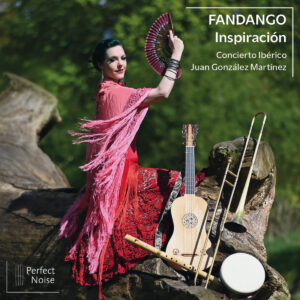
CD Fandango - Inspiración

Fandango – Inspiration: dancing joy of life
Whether rich or poor, young or old, tall or short: almost everyone in the population mastered the basic steps of this improvisational song and dance, which was performed in dance academies and theaters as well as on city streets, in pubs, dance halls, and in the palaces of the upper class.
The fandango, Spain's national dance in the 18th century, usually accompanied by guitar and castanets, was and is simply danced joie de vivre!
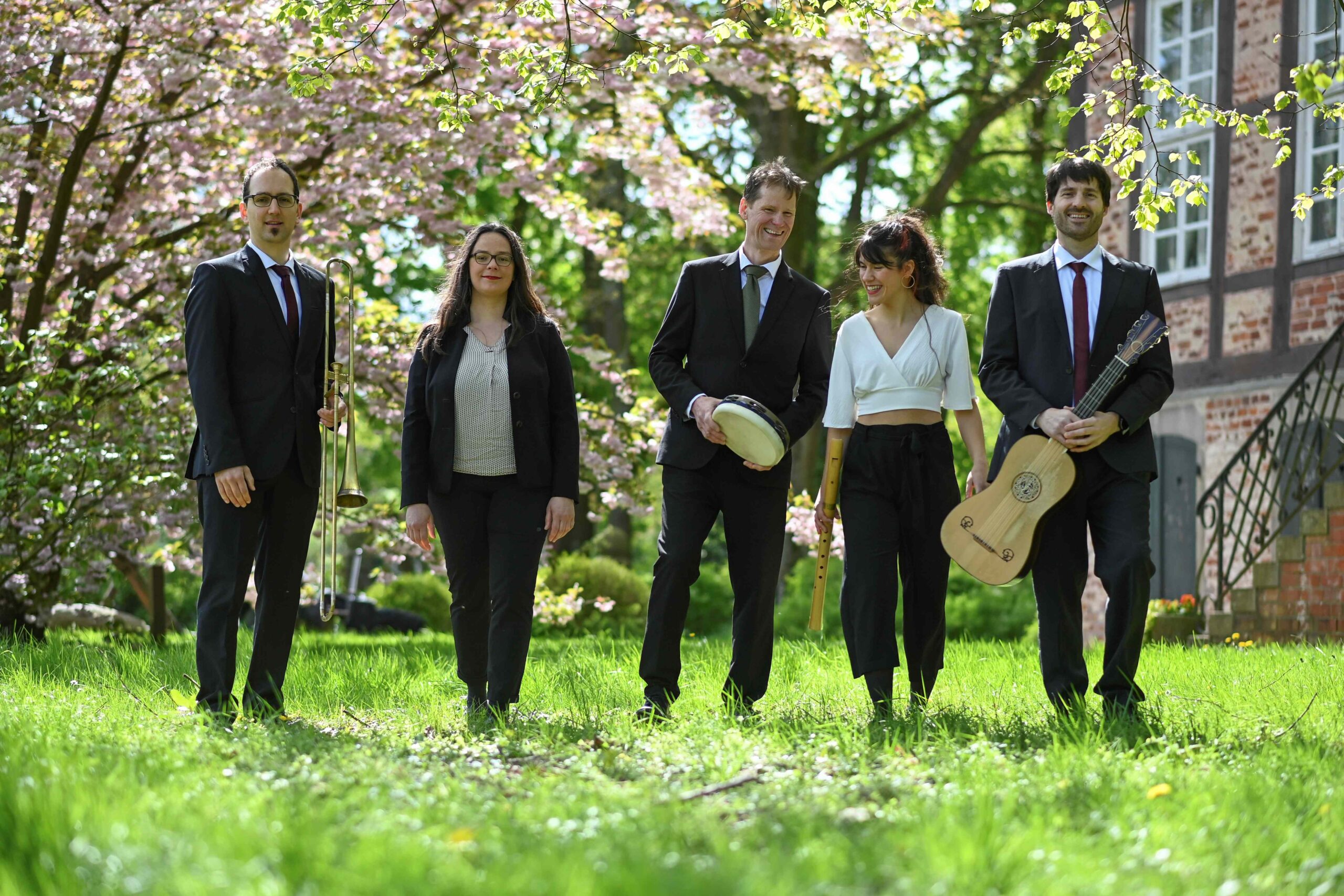
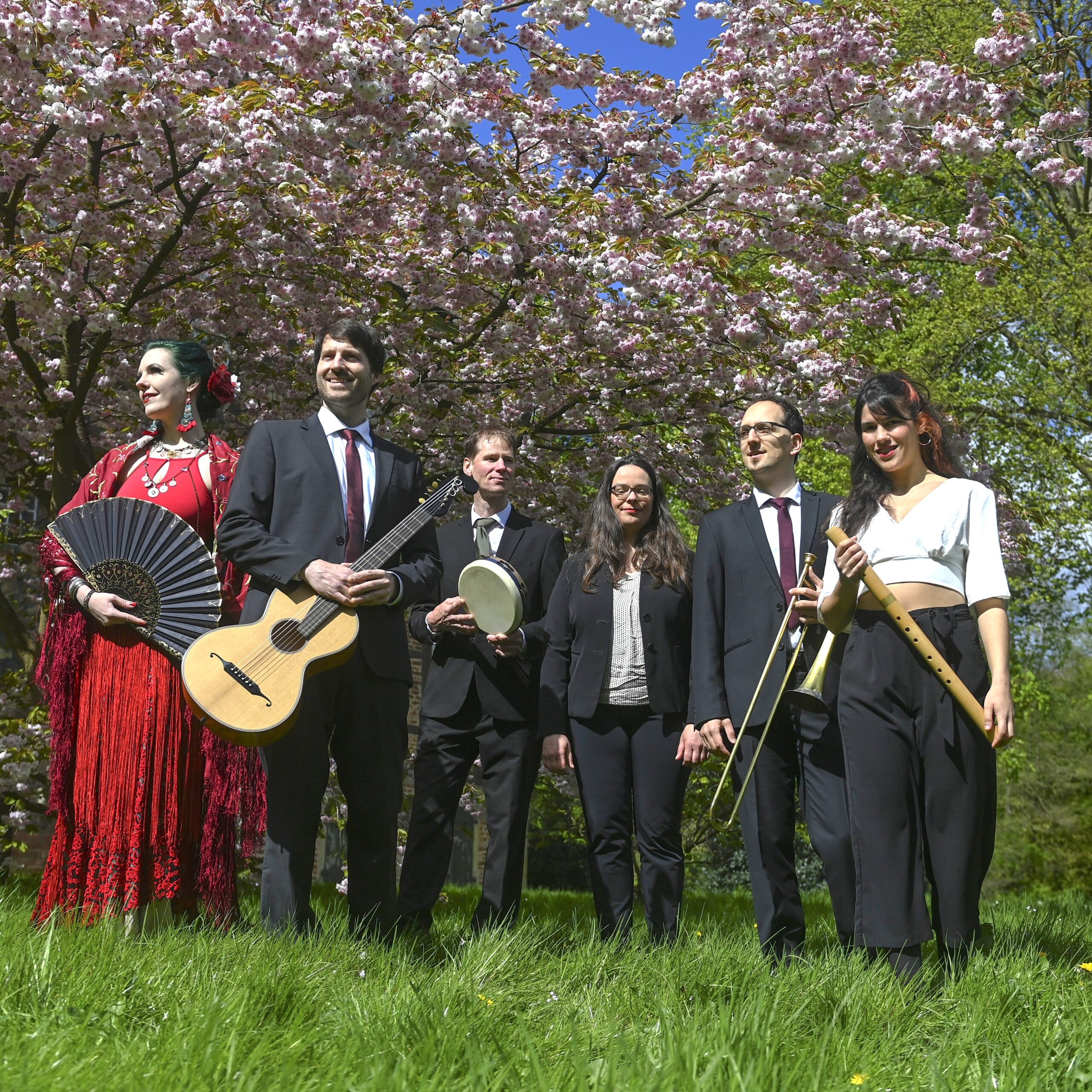
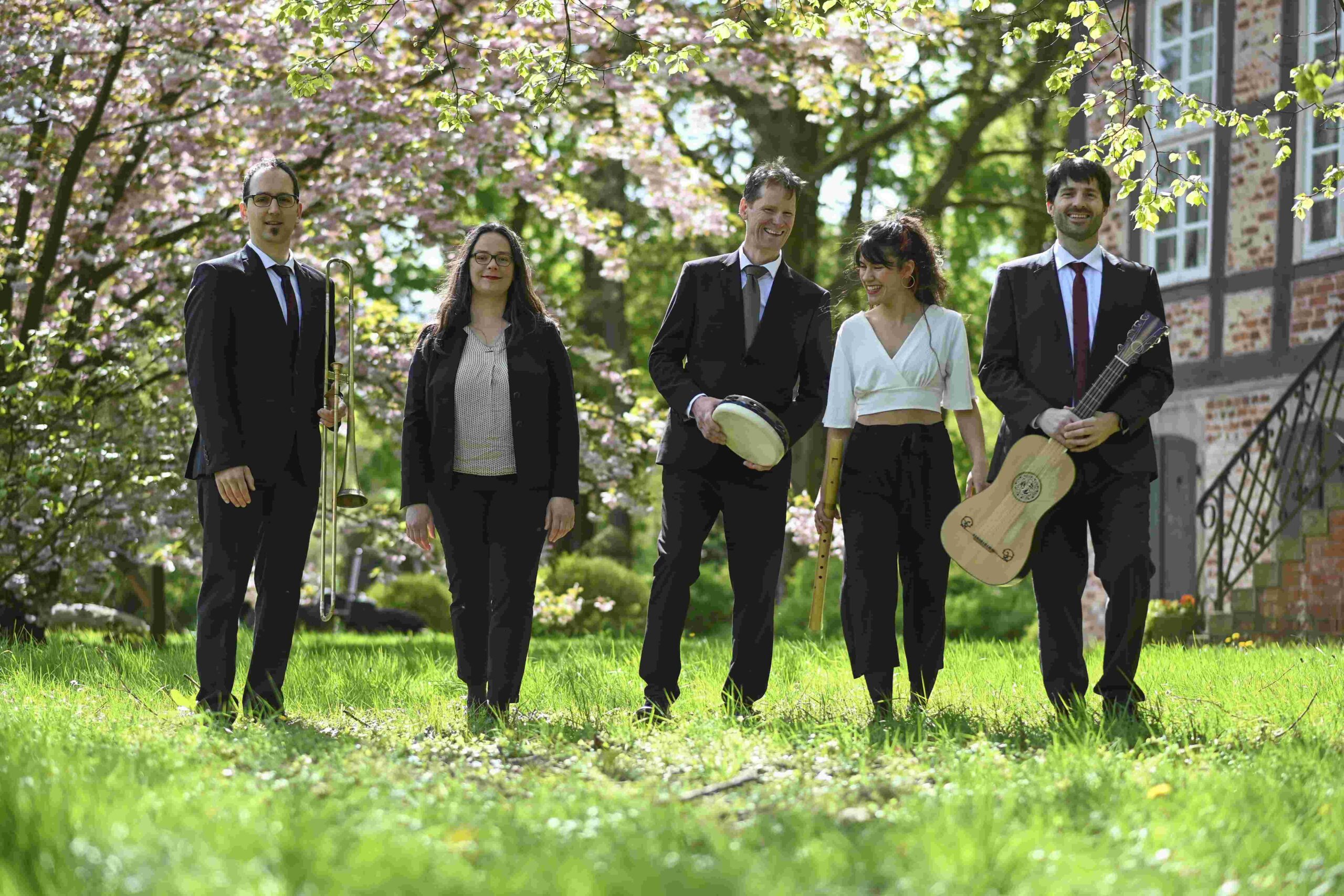
Spanish music from the Renaissance to the Romantic period and its influence throughout Europe are the focus of our ensemble Concierto Ibérico.
We play this music on various historical instruments, with each musician mastering several wind, keyboard, or plucked instruments, in keeping with historical sources, which often refer to "all kinds of instruments" for this repertoire. Occasionally, we also collaborate with dancers or singers.
Through our music we aim to further the intercultural exchange between Spain and the rest of Europe that has existed since the mid-sixteenth to mid-seventeenth century “Siglo de Oro“ – Spain’s Golden Age. Our understanding of intercultural influences goes beyond European borders to include connections between the Iberian Peninsula and Latin America, Africa and the Middle East, allowing audiences to join us in a modern intercultural dialogue between the sounds of the past and the world of today.
We especially like to present our music in historical, but also in alternative and innovative places and festivals. In recent years, for example, we have played in the newly established Center for Art in Bremen's Tabakquartier and in Leipzig's Kulturnhalle or in Hamburg's St. Petri Church and Bremen Cathedral, or in festivals such as the Kasteelconcerten-NL (2024), the World Book Day (2023), the Arp-Schnitger-Tage (2022), Diademus-Festival (2021) and a tour in Spain (2019) on the occasion of the 200th anniversary of the Bremen Town Musicians.
In cooperation with the creative educational event organizer StattReisen Bremen, we take visitors on a tour led by a guide to 16th-century Bremen and present the music of the real town musicians in a promenade concert with a city tour: KonzertStattReise. We also offer a new KonzertStattReise tour focusing on urban development and the many pleasures and inspirations of tobacco in Bremen's tobacco quarter.
As a young ensemble, we have been selected and supported by the Cultural Foundation of the German States, the German Music Council, and the Bremen Senator for Culture. In 2022, we released our first CD, "Españoletas – Spanish Wind."
Reviews of Concierto Ibérico
CD "Fandango - Inspiration"
Fandango – Inspiración is a world-class album on whichConcierto Ibérico, with a love for early music, virtuosos the fandango from different perspectives.
Mattie Poels, June 4, 2025 https://www.musicframes.nl/2025/06/leve-de-fandango/#more-76219
Habent Sua Fata Libelli & Carmina, June 7, 2025
"Who is smuggling these compositions into our time? The wonderful musicians of Concierto Ibérico: Inés Pina Pérez coaxes gentle melodies from a wide variety of recorders, Juan González Martínez, who leads the ensemble, plays different trombones with apparent ease, Miguel Bellas produces rapid runs on the guitar and theorbo, Lea Suter weaves a dense tapestry of plucked and deep (!) tones on her 16-foot harpsichord, and Peter Kuhnsch delights us with percussion that is never intrusive but always precisely timed." (Klemens Berthold)
https://www.klemens-berthold.de/2025/06/07/concierto-ibérico-fandango-inspiración
Premiere of "Fiestas de Primavera," Bremen Center for Art
"One of the maxims of Concierto Ibérico is to bring such forgotten composers back into musical consciousness. The cheerfulness, liveliness, humor, and intensity of the pieces played justify this mission, which the Bremen consortium has set itself on the concert grand piano. With their highly professional and virtuoso playing skills, these musicians are also predestined to fulfill this mandate."
Günter Rodewald – We were woken up by music! on April 28, 2025, https://guenterrodewald.wixsite.com
Premiere of "Arabesque," Bremen Broadcasting Hall
The distinctive rhythm was set by the drum, then the harpsichord, Spanish guitar, recorder, and trombone joined in. Since all instruments are historically accurate (trombone with narrow bore), they are perfectly balanced. Rapidly clattering castanets and the bright sound of the tambourine bells create an authentic Spanish sound; the pulsating rhythm is omnipresent."
The performances by dancer Dani Niemietz are undoubtedly the highlight of the evening. Not only does she appear in breathtakingly elegant, colorful outfits that change several times, Her graceful movements, which combine elements of classical belly dancing, flamenco, Indian and North African folk dances, ballet, and various contemporary forms, are consistently expressive, aesthetic to ethereal, and always as supple as a gazelle, down to the last finger and toe."
"...in the farce of the curious Nasreddin, Rogers is in his element; with gestures and facial expressions, he presents the witty pranks in a convincingly humorous and funny way."
(Dr. Gerd Klingeberg in Klassik-begeistert.de, May 31, 2024).
CD "Españoletas – Spanish Wind"
"The playing here is brilliant."
(Peter Loewen in American Record Guide 05/06, 2023)
"The stylistics of the music and the instruments create a characteristic sound across the 22 tracks. But each piece is entertaining in its own right, whether through the combination of instruments, changes in rhythm, the full instrumentation, or the thinning out of the composition. A wonderful, precisely and passionately crafted album."
(Elisabeth Richter in Fono Forum, April 2023)
CD release tour "Españoletas – Spanish Wind"
Virtuoso individual performances:
All these contrasts come to bear in the piece "Españoletas" by Gaspar Sanz, after whom the program is named. The instrumentalists demonstrate not only virtuoso individual performances, but also their masterful ensemble playing. Even though the accompanying trombone part is often more complicated and ornate than the actual melody, Martínez never drowns out his colleagues. Lea Suter on the organ demonstrates the same musical strength."
Paradoxical sound experiences:
"Guitarist Miguel Bellas' playing style can definitely be described as funky, and Peter Kuhnsch's use of percussion instruments could just as easily be found in the atmospheric intro to a jazz standard. The virtuosity of the melodic instruments—Juan González Martínez on the trombone and Inés Pina Pérez on the flute—almost invites applause after particularly fast or lyrical passages."
(Hildesheimer Allgemeine Zeitung, March 27, 2023)
"Schnitger Days" festival
Discoveries from Spanish music:
"The music in the "Concierto Iberico" program entitled "Espanoletas – Spanish Wind" was also full of wonderful liveliness. […] And once again, the entire ensemble "Concierto Iberico" demonstrated its rousing enthusiasm and virtuosity, receiving loud applause after each piece and at the end of the concert."
(Günter Matysiak in the Weser-Kurier, April 19, 2022)
Upcoming concerts
No post found
Our current programs
Ensaladas – Health for your ears
+ Info
Healthy eating is on everyone's lips these days; hopefully yours too?!
At least, that was the case in 16th-century Spain, when the musical genre known as the ensalada (English: salad) was invented—a mishmash of well-known melodies, songs in many languages, sacred and secular, dramatic and solemn, popular with young and old, rich and poor alike. In short: a colorful salad for everyone, played throughout the country, in pubs and palaces.
With this program, Concerto Ibérico shows that these magnificent salads have lost none of their appeal to this day—and introduces you to healthy eating in a whole new way...

Arabesque – in a dance dialogue with Al-Andalus
+ Info
In music, dance, and poetry, this program tells stories from Al-Andalus, the Moorish-ruled Spain: of the beauty of princesses or the full moon over the Alhambra, of the Palace of Joy and the interpreters of Toledo — sung about in Renaissance moriscos or Ravel's Bolero, described by Goethe, Irving, and Mullah Nasruddin, and illustrated with contemporary dance.
Experience the wonder of eight centuries of coexistence between three cultures in three arts in this concert, set in beautiful Al-Andalus...
Fandango – Inspiration
+ Info
An evening of dancing joy of life and love
The fandango was Spain's national dance in the 18th century — because this dance was and is simply the joy of life expressed in dance. And, in a sense, also the joy of loveexpressed in dance; even Giacomo Casanova expressly praised the fandango as the "most seductive and voluptuous dance in the world." And he should know...
We, too, succumbed to the seductive charms of the fandango. With this program, we now want to give our audience the opportunity to experience what is so fascinating about this dance, why even the most renowned composers of earlier times were inspired by it—from Rameau to Soler, Boccherini, Scarlatti, and Gaspar Sanz.
But what would dances be without dancing? — Only half the story. That's why we're bringing this program to the stage together with the wonderful dancer Daniela Niemietz, who will translate our sounds into movement with breathtaking choreography.
"Españoletas - Spanish Wind"
+ Info
Sounds from the Golden Age
Españoletas– Spanish Windaims to revive the music of the town musicians (ES: Ministriles) and share it with today's listeners. With lively dances, lovely canzonas, and rousing recercadas, we convey an impression of the tremendous joie de vivre and the exhilarating joy of festivals and celebrations that radiates from the Spanish town pipers' music of the 16th and 17th centuries.
Videos of Concierto Ibérico
The musicians behind the Concierto Ibérico ensemble

Juan Gonzalez Martinez
Renaissance and Baroque trombone and artistic director
Juan González Martínez sets new accents in his artistic projects as ensemble director and is a founding member of our ensemble. His musicality and playing skills represent a palette of timbres that enables him to achieve breathtaking expressiveness in both virtuoso and cantabile playing.
He is considered one of the most versatile trombonists of the younger generation in the field of historical performance practice. He first studied historical trombone with Wim Becu in Bremen and The Hague. He plays historical instruments with renowned orchestras and ensembles in the early music scene throughout Europe and is dedicated to reviving their original sound by studying their specific playing techniques from the Renaissance to the Romantic period.> to the CV

Inés Pina Pérez
Renaissance and Baroque recorders
Inés Pina Pérez was born in Huesca, Spain. Between 2012 and 2019, she studied recorder in Spain and Germany with Vicente Parrilla and Han Tol, supplemented by masterclasses with Katharina Bopp, Kees Boeke, Dan Laurin, Pamela Thorby, and others. She is currently a member of several ensembles that perform regularly in Germany, the Netherlands, and Switzerland. Her ensemble Thamyris was a finalist in the "Förderpreis-Wettbewerb Alte Musik 2020/21" (Early Music Promotion Prize Competition 2020/21) in Saarland. In addition, she was awarded a prize as a soloist in the "Moeck Solo Recorder Competition" in 2021.

Lea Suter
Organ, harpsichord, clavichord
Born in Switzerland, Lea Suter works as a soloist on the international concert circuit and as a tutor at the International Organ and Clavichord Academy in Smarano, Italy. For the 22/23 season, she received the #MusikerZukunft scholarship from the German Orchestra Foundation for her work with the clavichord. As a soloist on the 16-foot harpsichord, she regularly performs with baroque orchestras. In 2020, she released the podcast "Glocke Orgel digital" featuring the historic Sauer organ (1928) at the Bremen Concert Hall, which also resulted in a first CD recording on the Dabringhaus & Grimm label. In addition, she performs with her own Weckman Consort and in other ensembles such as the Duo GlossArte and Concierto Ibérico.

Miguel Bellas
baroque guitar, theorbo
Miguel Bellas discovered his instrument through rock music and later studied jazz guitar with guitarist Kely García, classical guitar with Prof. Margarita Escarpa, and lute with Prof. Rolf Lislevand throughout Europe. He demonstrates his versatility as a sought-after musician both as a soloist and as a chamber music partner for several renowned ensembles (Artemandoline, Nuria Rial, Anton Steck, La Gallarda, Ensemble Pretiosa, I Fedeli, Stuttgart Chamber Orchestra, O/Modernt, Ad Fontes). He performs regularly with Latvian soprano Baiba Urka and teaches guitar at the Renningen Music School (Germany).

Peter Kuhnsch
percussion
Peter Kuhnsch was born in Nuremberg. While studying percussion at the University of Music and Theater in Leipzig, diversity of instruments and styles was his top priority. His passion for hand drums from Oriental cultures led him to collaborate more and more with Persian, Arabic, and early music.
He now lives in Berlin, where he enjoys the musical abundance.

Dani Niemietz
dance
Dani Niemietz – dance teacher, dancer, choreographer, and special education teacher (M.A.) from Hanover. She began her dance career at the age of two with rhythmics, classical ballet, and Spanish dance. Via jazz and modern dance, she eventually came to Egyptian dance and thus to numerous contemporary dance fusions. She has been on stage since early childhood. In addition to national and international engagements, she can often be seen on various stages in Hanover. She has danced at the Hanover State Opera, the Herrenhausen Garden Theater, the Orangery, and the Herrenhausen Arts Festival, among others. Most recently, she performed as a soloist in the Herrenhausen Baroque concert series under the direction of Alon Sariel. In her solo and choreographic works, she combines numerous genres into a unique fusion. Her main concern is to reach the audience with appropriate movement language—and in doing so, to find a language with which to tell a story for which there are no words. As a lecturer in FCBD®Style and Flamenco Dialect, she enjoys international renown and trains dancers and dance teachers around the world.
guests
- Anna Schall - Cornetto
- Martin Bolterauer - Cornetto
- Miroslav Küzl – Zinc
- Robert Schlegl – Baroque trombone
- Cameron Drayton – Baroque trombone
- Cas Gevers – Baroque trombone
- Clemens Schlemmer – Dulcian
- Ester van der Veen – Dulcian
- Nora Thiele – Percussion
- Hannes Malkowski – Percussion
- Peter Bauer – Percussion
- Carmen Callejas García – soprano
Cooperation and program selection by Concierto Ibérico

Here you will find an excerpt from our current program.
We will gladly send you details on request.
Arabesque – In a dance dialogue with Al-Andalus
Interdisciplinary stage program reflecting Moorish influences with dancer Dani Niemietz and storyteller John Rogers, from the Renaissance to Romanticism with Ravel and Debussy.
Fandango – Inspiration
Interdisciplinary program featuring 18th-century Spanish music and dancer Dani Niemietz, a specialist in contemporary dance fusions, dedicated to the intercultural influences of the fandango.
Españoletas – Spanish wind
A celebration of instrumental music from the Siglo de Oro with works by Antonio de Cabezón, Diego Ortiz, and Gaspar Sanz performed by a wind consort with Spanish guitar, percussion, and organ. Can also be performed by four or five musicians. A reflection on the Spanish influence in 16th-century Europe, traced through the melody "Españoletas" and where it could be found. With this project, Concierto Iberico was supported as a NEW ENSEMBLE by Neustart Kultur.
Dancing and jumping
Choral and instrumental music from the Renaissance and early Baroque periods: In cooperation with the boys' choir of the Church of Our Lady and music from the 16th and 17th centuries, performed on cornett, Baroque recorder, Baroque trombone, dulcian, organ, Spanish guitar, and percussion.
World Book Day – Bremen
Presentation of the programs "Suite Cortesana" and "KonzertStattReise – Die Bremer Stadtmusikanten 2.0" (Concert Instead of Travel – The Bremen Town Musicians 2.0) in cooperation with StattReisen Bremen, the Shakespeare Company, and other cultural actors as part of the City of Bremen's application to become a UNESCO City of Literature.
Tonos humanos – Spanish songs from the 16th century with singer Carmen Callejas
Suite Cortesana: A journey back in time to the Habsburg Golden Age with crazy canzonas, rousing sonatas, and ornate motets.
Ministriles Stadtpfeiferkultur – A musical journey into the golden age of Spanish music:
With works by Antonio Martin y Coll, Bartolomé de Selma y Salaverde, and Santiago de Murcia.
ConcertInsteadOfTravel – The Bremen Town Musicians 2.0: A pioneering city tour with live music in Bremen around 1600 in cooperation with StattReisen Bremen, focusing on the Bremen Town Musicians in the Hanseatic city center. A project sponsored by KULTURGEMEINSCHAFTEN.
Monteverdi – Marian Vespers
As part of the Diademus Festival in Roggenburg: presentation of our program "Ministriles Stadtpfeiferkultur" (see above) and participation in the closing concert "Marienversper" by Monteverdi.
Glosas y Danzas: Virtuoso Spanish and Italian music of the 17th century
All programs can be adapted and supplemented as needed and appropriate.
Sponsors of Concierto Ibérico
Concierto Ibérico is sponsored by:


Would you like to support us?
Become a patron of Concierto Ibérico
Does this lively and characterful music touch you as deeply as it touches us?
Playing music on historical or replica instruments, researching musical sources, and transcribing facsimiles into playable sheet music requires conditions that involve very intensive musical work, ongoing investment, and unexpectedly high financial costs.
If you would like to support the realization of new projects, enable exclusive recordings on CD, or contribute to the maintenance or expansion of the instruments, please contact us (conciertoiberico@gmail.com). In doing so, you will be supporting innovative and sustainable projects that have a (supra)regional impact.

GlossArte e. V. Support Association
Sparkasse Bremen
IBAN DE48 2905 0101 0083 2445 74
BIC: SBREDE22XXX
Purpose: "Donation to Concierto Ibérico"
If you would like to support us, you will receive a donation receipt.
Concierto Ibérico brings Spanish music to northern Germany
Spanish music from the Renaissance to the Romantic period and its influence throughout Europe are the focus of our ensemble Concierto Ibérico.
We play this music on various historical instruments, with each musician mastering several wind, keyboard, or plucked instruments, in keeping with historical sources, which often refer to "all kinds of instruments" for this repertoire. Occasionally, we also collaborate with dancers or singers.
New release: CD Fandango - Inspiración

Fandango – Inspiration: dancing joy of life
Whether poor or rich, young or old, tall or short:
Almost everyone in the population knew the basic steps of this improvisational song and dance, which was performed in dance academies and theaters as well as on city streets, in pubs, dance halls, and in the palaces of the upper class.
The fandango, Spain's national dance in the 18th century, usually accompanied by guitar and castanets, was and is simply danced joie de vivre!
Upcoming concerts
No post found
Reviews of Concierto Ibérico
CD Fandango - Inspiration
Fandango – Inspiración isa world-class album on whichConcierto Ibérico, with a love for early music, virtuosos the fandango from different perspectives.
Mattie Poels, June 4, 2025 https://www.musicframes.nl/2025/06/leve-de-fandango/#more-76219
Habent Sua Fata Libelli & Carmina, June 7, 2025
"Who is smuggling these compositions into our time? The wonderful musicians of Concierto Ibérico: Inés Pina Pérez coaxes gentle melodies from a wide variety of recorders, Juan González Martínez, who leads the ensemble, plays different trombones with apparent ease, Miguel Bellas produces rapid runs on the guitar and theorbo, Lea Suter weaves a dense tapestry of plucked and deep (!) tones on her 16-foot harpsichord, and Peter Kuhnsch delights us with percussion that is never intrusive but always precisely timed." (Klemens Berthold)
https://www.klemens-berthold.de/2025/06/07/concierto-ibérico-fandango-inspiración
Premiere of "Fiestas de Primavera," Bremen Center for Art
"One of the maxims of Concierto Ibérico is to bring such forgotten composers back into musical consciousness. The cheerfulness, liveliness, humor, and intensity of the pieces played justify this mission, which the Bremen consortium has set itself on the concert grand piano. With their highly professional and virtuoso playing skills, these musicians are also predestined to fulfill this mandate."
Günter Rodewald – We were woken up by music! on April 28, 2025, https://guenterrodewald.wixsite.com
Premiere of "Arabesque" in Bremen's Sendesaal concert hall
The distinctive rhythm was set by the drum, then the harpsichord, Spanish guitar, recorder, and trombone joined in. Since all instruments are historically accurate (trombone with narrow bore), they are perfectly balanced. Rapidly clattering castanets and the bright sound of the tambourine bells create an authentic Spanish sound; the pulsating rhythm is omnipresent."
The performances by dancer Dani Niemietz are undoubtedly the highlight of the evening. Not only does she appear in breathtakingly elegant, colorful outfits that change several times, Her graceful movements, which combine elements of classical belly dancing, flamenco, Indian and North African folk dances, ballet, and various contemporary forms, are consistently expressive, aesthetic to ethereal, and always as supple as a gazelle, down to the last finger and toe."
"...in the farce of the curious Nasreddin, Rogers is in his element; with gestures and facial expressions, he presents the witty pranks in a convincingly humorous and funny way."
(Dr. Gerd Klingeberg in Klassik-begeistert.de, May 31, 2024).
CD "Españoletas – Spanish Wind"
"The playing here is brilliant."
(Peter Loewen in American Record Guide 05/06, 2023)
"The stylistics of the music and the instruments create a characteristic sound across the 22 tracks. But each piece is entertaining in its own right, whether through the combination of instruments, changes in rhythm, the full instrumentation, or the thinning out of the composition. A wonderful, precisely and passionately crafted album."
(Elisabeth Richter in Fono Forum, April 2023)
CD release tour "Españoletas – Spanish Wind"
Virtuoso individual performances:
All these contrasts come to bear in the piece "Españoletas" by Gaspar Sanz, after whom the program is named. The instrumentalists demonstrate not only virtuoso individual performances, but also their masterful ensemble playing. Even though the accompanying trombone part is often more complicated and ornate than the actual melody, Martínez never drowns out his colleagues. Lea Suter on the organ demonstrates the same musical strength."
Paradoxical sound experiences:
"Guitarist Miguel Bellas' playing style can definitely be described as funky, and Peter Kuhnsch's use of percussion instruments could just as easily be found in the atmospheric intro to a jazz standard. The virtuosity of the melodic instruments—Juan González Martínez on the trombone and Inés Pina Pérez on the flute—almost invites applause after particularly fast or lyrical passages."
(Hildesheimer Allgemeine Zeitung, March 27, 2023)
"Schnitger Days" festival
Discoveries from Spanish music:
"The music in the "Concierto Iberico" program entitled "Espanoletas – Spanish Wind" was also full of wonderful liveliness. […] And once again, the entire ensemble "Concierto Iberico" demonstrated its rousing enthusiasm and virtuosity, receiving loud applause after each piece and at the end of the concert."
(Günter Matysiak in the Weser-Kurier, April 19, 2022)
Our current programs
Ensaladas – Health for your ears

Healthy eating is on everyone's lips these days; hopefully yours too?!
At least, that was the case in 16th-century Spain, when the musical genre known as the ensalada (English: salad) was invented—a mishmash of well-known melodies, songs in many languages, sacred and secular, dramatic and solemn, popular with young and old, rich and poor alike. In short: a colorful salad for everyone, played throughout the country, in pubs and palaces.
With this program, Concerto Ibérico shows that these magnificent salads have lost none of their appeal to this day—and introduces you to healthy eating in a whole new way...
Arabesque – in a dance dialogue with Al-Andalus
In music, dance, and poetry, this program tells stories from Al-Andalus, the Moorish-ruled Spain of the Middle Ages: of the beauty of Moorish princesses or full moon nights in the Alhambra, of the Palace of Joy or the interpreters of Toledo.
From the 8th to the 15th century, the Moors ruled over a large part of the Iberian Peninsula, and so Christians, Muslims, and Jews had to coexist here somehow. Naturally, this coexistence was not entirely free of conflict, but there were always long periods of genuine peace, characterized by tolerance and respect among the religious groups, secured by treaties and alliances — and so these centuries of Moorish rule are often referred to by historians and philologists as "The Miracle of Al-Andalus."
And surprisingly, it was precisely this coexistence of cultures that gave rise to an unparalleled flourishing of the sciences and arts — a coexistence that made possible buildings such as the Alhambra, the most subtle poetry and the most stirring music — and which gave rise to a special festive culture in which music, dance, and poetry were inextricably linked!
We would now like to share this flourishing with the visitors to our concerts. So look forward to a festival full of music — from the Renaissance Moresca to Ravel's Bolero — and look forward to the storyteller John Rogers with his Hispano-Moorish stories by Goethe, Irving, and Nasruddin, and look forward to the fascinating dance performances by Dani Niemietz, who will translate this coexistence of cultures into dance styles ranging from belly dancing to contemporary dance to Flamenco Dialect. In short: experience the wonder of eight centuries of coexistence of three cultures in three arts in our program!

Fandango – Inspiration
An evening of dancing joy of life and love
The fandango, to which we would like to dedicate this program, was Spain's national dance in the 18th century. Whether rich or poor, young or old, tall or short: almost everyone in the population knew the basic steps of this improvisational song and dance, which was performed in theaters as well as on the streets, in pubs, and in the palaces of the upper classes. The fandango, usually accompanied by guitar and castanets, was and is simply danced joie de vivre!
And—as many prudish contemporaries lamented at the time—the joy of love was also danced: "The bodies move to the cadences of the music, with all passionate excitement, in extremely voluptuous movements, with foot stamping, glances, jumps, with all figures brimming with lascivious intentions," complained the dean of Alicante in 1712. And if that's not enough proof of the fandango's charms, rest assured that even Giacomo Casanova explicitly described the fandango as the "most seductive and voluptuous dance in the world." And he should know...
The origins of the fandango have not yet been fully researched, but it is clear that it has Oriental and/or South American influences.
Immerse yourself in the world of flamenco's roots – the fandango – in an improvisational musical approach by Concierto Iberico in collaboration with one of today's most versatile dancers, Daniela Niemietz.
Españoletas - Spanish Wind
Sounds from the Golden Age – The Ministriles and their music around 1600
Españoletas– Spanish Windaims to revive the music of these ministriles and share it with today's listeners. With festive music from the Renaissance and early Baroque periods, we take concertgoers on a journey back in time to the Siglo de Oro, Spain's golden age, when composers such as Antonio de Cabezón, Diego Ortiz, and Gaspar Sanz were celebrated throughout Europe.
Lively dances, lovely canzonas, and rousing recercadas, played by a historical ministriles ensemble, convey in this concert an impression of the tremendous joie de vivre and the exhilarating joy of festivals and celebrations that radiates from the Spanish town pipers' music of the 16th and 17th centuries.

The Concierto ibérico ensemble
Through our music we aim to further the intercultural exchange between Spain and the rest of Europe that has existed since the mid-sixteenth to mid-seventeenth century “Siglo de Oro“ – Spain’s Golden Age. Our understanding of intercultural influences goes beyond European borders to include connections between the Iberian Peninsula and Latin America, Africa and the Middle East, allowing audiences to join us in a modern intercultural dialogue between the sounds of the past and the world of today.
We especially like to present our music in historical, but also in alternative and innovative places and festivals. In recent years, for example, we have played in the newly established Center for Art in Bremen's Tabakquartier and in Leipzig's Kulturnhalle or in Hamburg's St. Petri Church and Bremen Cathedral, or in festivals such as the Kasteelconcerten-NL (2024), the World Book Day (2023), the Arp-Schnitger-Tage (2022), Diademus-Festival (2021) and a tour in Spain (2019) on the occasion of the 200th anniversary of the Bremen Town Musicians.
In cooperation with the creative educational event organizer StattReisen Bremen, we take visitors on a tour led by a guide to 16th-century Bremen and present the music of the real town musicians in a promenade concert with a city tour: KonzertStattReise. We also offer a new KonzertStattReise tour focusing on urban development and the many pleasures and inspirations of tobacco in Bremen's tobacco quarter.
As a young ensemble, we have been selected and supported by the Cultural Foundation of the German States, the German Music Council, and the Bremen Senator for Culture. In 2022, we released our first CD, "Españoletas – Spanish Wind."
The musicians behind the Concierto Ibérico ensemble

Juan Gonzalez Martinez
Renaissance and Baroque trombone and artistic director
Juan González Martínez sets new accents in his artistic projects as ensemble director and is a founding member of our ensemble. His musicality and playing skills represent a palette of timbres that enables him to achieve breathtaking expressiveness in both virtuoso and cantabile playing.
He is considered one of the most versatile trombonists of the younger generation in the field of historical performance practice. He first studied historical trombone with Wim Becu in Bremen and The Hague. He plays historical instruments with renowned orchestras and ensembles in the early music scene throughout Europe and is dedicated to reviving their original sound by studying their specific playing techniques from the Renaissance to the Romantic period.> to the CV
Inés Pina Pérez
Renaissance and Baroque recorders
Inés Pina Pérez was born in Huesca, Spain. Between 2012 and 2019, she studied recorder in Spain and Germany with Vicente Parrilla and Han Tol, supplemented by masterclasses with Katharina Bopp, Kees Boeke, Dan Laurin, Pamela Thorby, and others. She is currently a member of several ensembles that perform regularly in Germany, the Netherlands, and Switzerland. Her ensemble Thamyris was a finalist in the "Förderpreis-Wettbewerb Alte Musik 2020/21" (Early Music Promotion Prize Competition 2020/21) in Saarland. In addition, she was awarded a prize as a soloist in the "Moeck Solo Recorder Competition" in 2021.


Lea Suter
Organ, harpsichord, clavichord
Born in Switzerland, Lea Suter works as a soloist on the international concert circuit and as a tutor at the International Organ and Clavichord Academy in Smarano, Italy. For the 22/23 season, she received the #MusikerZukunft scholarship from the German Orchestra Foundation for her work with the clavichord. As a soloist on the 16-foot harpsichord, she regularly performs with baroque orchestras. In 2020, she released the podcast "Glocke Orgel digital" featuring the historic Sauer organ (1928) at the Bremen Concert Hall, which also resulted in a first CD recording on the Dabringhaus & Grimm label. In addition, she performs with her own Weckman Consort and in other ensembles such as the Duo GlossArte and Concierto Ibérico.
Miguel Bellas
baroque guitar, theorbo
Miguel Bellas discovered his instrument through rock music and later studied jazz guitar with guitarist Kely García, classical guitar with Prof. Margarita Escarpa, and lute with Prof. Rolf Lislevand throughout Europe. He demonstrates his versatility as a sought-after musician both as a soloist and as a chamber music partner for several renowned ensembles (Artemandoline, Nuria Rial, Anton Steck, La Gallarda, Ensemble Pretiosa, I Fedeli, Stuttgart Chamber Orchestra, O/Modernt, Ad Fontes). He performs regularly with Latvian soprano Baiba Urka and teaches guitar at the Renningen Music School (Germany).


Peter Kuhnsch
percussion
Peter Kuhnsch was born in Nuremberg. While studying percussion at the University of Music and Theater in Leipzig, diversity of instruments and styles was his top priority. His passion for hand drums from Oriental cultures led him to collaborate more and more with Persian, Arabic, and early music.
He now lives in Berlin, where he enjoys the musical abundance.
Dani Niemietz
dance
Dani Niemietz – dance teacher, dancer, choreographer, and special education teacher (M.A.) from Hanover. She began her dance career at the age of two with rhythmics, classical ballet, and Spanish dance. Via jazz and modern dance, she eventually came to Egyptian dance and thus to numerous contemporary dance fusions. She has been on stage since early childhood. In addition to national and international engagements, she can often be seen on various stages in Hanover. She has danced at the Hanover State Opera, the Herrenhausen Garden Theater, the Orangery, and the Herrenhausen Arts Festival, among others. Most recently, she performed as a soloist in the Herrenhausen Baroque concert series under the direction of Alon Sariel. In her solo and choreographic works, she combines numerous genres into a unique fusion. Her main concern is to reach the audience with appropriate movement language—and in doing so, to find a language with which to tell a story for which there are no words. As a lecturer in FCBD®Style and Flamenco Dialect, she enjoys international renown and trains dancers and dance teachers around the world.

guests
Anna Schall - Cornetto
Martin Bolterauer - Cornetto
Miroslav Küzl – Zinc
Robert Schlegl – Baroque trombone
Cameron Drayton – Baroque trombone
Cas Gevers – Baroque trombone
Clemens Schlemmer – Dulcian
Ester van der Veen – Dulcian
Nora Thiele – Percussion
Hannes Malkowski – Percussion
Peter Bauer – Percussion
Carmen Callejas García – soprano
Program selection by Concierto Ibérico
Here you will find an excerpt from our current program.
We will gladly send you details on request.

Arabesque – In a dance dialogue with Al-Andalus
An interdisciplinary stage program that reflects on Moorish influences from the Renaissance to Romanticism with Ravel and Debussy, featuring dancer Dani Niemietz and storyteller John Rogers.
Fandango – Inspiración
Interdisciplinary program featuring 18th-century Spanish music and dancer Dani Niemietz, a specialist in contemporary dance fusions, dedicated to the intercultural influences of the fandango.
Españoletas – Spanish Wind
A celebration of instrumental music from the Siglo de Oro with works by Antonio de Cabezón, Diego Ortiz, and Gaspar Sanz performed by a wind consort with Spanish guitar, percussion, and organ. Can also be performed by four or five musicians. A reflection on the Spanish influence in 16th-century Europe, traced through the melody "Españoletas" and where it could be found.
Dancing and jumping
Choral and instrumental music from the Renaissance and early Baroque periods: In cooperation with the boys' choir of the Church of Our Lady and music from the 16th and 17th centuries, performed on cornett, baroque recorder, baroque trombone, dulcian, organ, Spanish guitar, and percussion.
Bremen World Book Day
Presentation of the program "Suite Cortesana" and "KonzertStattReise - Die Bremer Stadtmusikanten 2.0" in cooperation with StattReisen Bremen, the Shakespeare Company and other cultural actors as part of Bremen's application to become a UNESCO City of Literature.
Tonos humanos
Spanish songs from the 16th century with singer Carmen Callejas
's Suite Cortesana
A journey back in time to the Habsburg Golden Age with crazy canzonas, rousing sonatas, and ornate motets.
Monteverdi – Marian Vespers
As part of the Diademus Festival, Roggenburg: Presentation of our program "Ministriles Stadtpfeiferkultur" (see above) and participation in the closing concert "Marian Vespers" by Monteverdi.
Ministriles Stadtpfeiferkultur
A musical journey into the golden age of Spanish music: with works by Antonio Martin y Coll, Bartolomé de Selma y Salaverde, and Santiago de Murcia.
Glosas y Danzas
Virtuoso Spanish and Italian music of the 17th century
KonzertStattReise - The Bremen Town Musicians 2.0
A pioneering city tour with live music in Bremen around 1600 in cooperation with StattReisen Bremen around the Bremen Town Musicians in the Hanseatic city center. A project supported by KULTURGEMEINSCHAFTEN.
All programs can be adapted and supplemented as needed and appropriate.
Sponsors of Concierto Ibérico
Concierto Ibérico is sponsored by:


Would you like to support us?
Become a patron of Concierto Ibérico
Does this lively and characterful music touch you as deeply as it touches us?
Playing music on historical or replica instruments, researching musical sources, and transcribing facsimiles into playable sheet music requires conditions that involve very intensive musical work, ongoing investment, and unexpectedly high financial costs.
If you would like to support the realization of new projects, enable exclusive recordings on CD, or contribute to the maintenance or expansion of the instruments, please contact us (conciertoiberico@gmail.com). In doing so, you will be supporting innovative and sustainable projects that have a (supra)regional impact.

GlossArte e. V. Support Association
Sparkasse Bremen
IBAN DE48 2905 0101 0083 2445 74
BIC: SBREDE22XXX
Purpose: "Donation to Concierto Ibérico"
If you would like to support us, you will receive a donation receipt.