arabesque
In a dance dialogue with Al-Andalus
In music, dance, and poetry, this program tells stories from Al-Andalus, medieval Spain under Moorish rule: of the beauty of Moorish princesses or full moon nights in the Alhambra, of the Palace of Joy or the interpreters of Toledo.
From the 8th to the 15th century, the Moors ruled over a large part of the Iberian Peninsula, and so Christians, Muslims, and Jews had to coexist here somehow. Naturally, this coexistence was not entirely free of conflict, but there were always long periods of genuine peace, characterized by tolerance and respect among the religious groups, secured by treaties and alliances — and so these centuries of Moorish rule are often referred to by historians and philologists as "The Miracle of Al-Andalus."
And surprisingly, it was precisely this coexistence of cultures that gave rise to an unparalleled flourishing of the sciences and arts—a coexistence that made possible buildings such as the Alhambra, the most subtle poetry, and the most stirring music— and which gave rise to a special festive culture in which music, dance, and poetry were inseparable!
We would now like to share this blossoming with visitors to our concerts. So look forward to a festival full of music—from Renaissance Moresca to Ravel's Bolero—and look forward to storyteller John Rogers with Hispano-Moorish stories by Goethe, Irving, and Nasruddin, and look forward to the fascinating dance performances by Dani Niemietz, who will translate this coexistence of cultures into dance styles ranging from belly dancing to contemporary dance to Flamenco Dialect. In short: experience the wonder of eight centuries of coexistence of three cultures in three arts in our program!
contributors
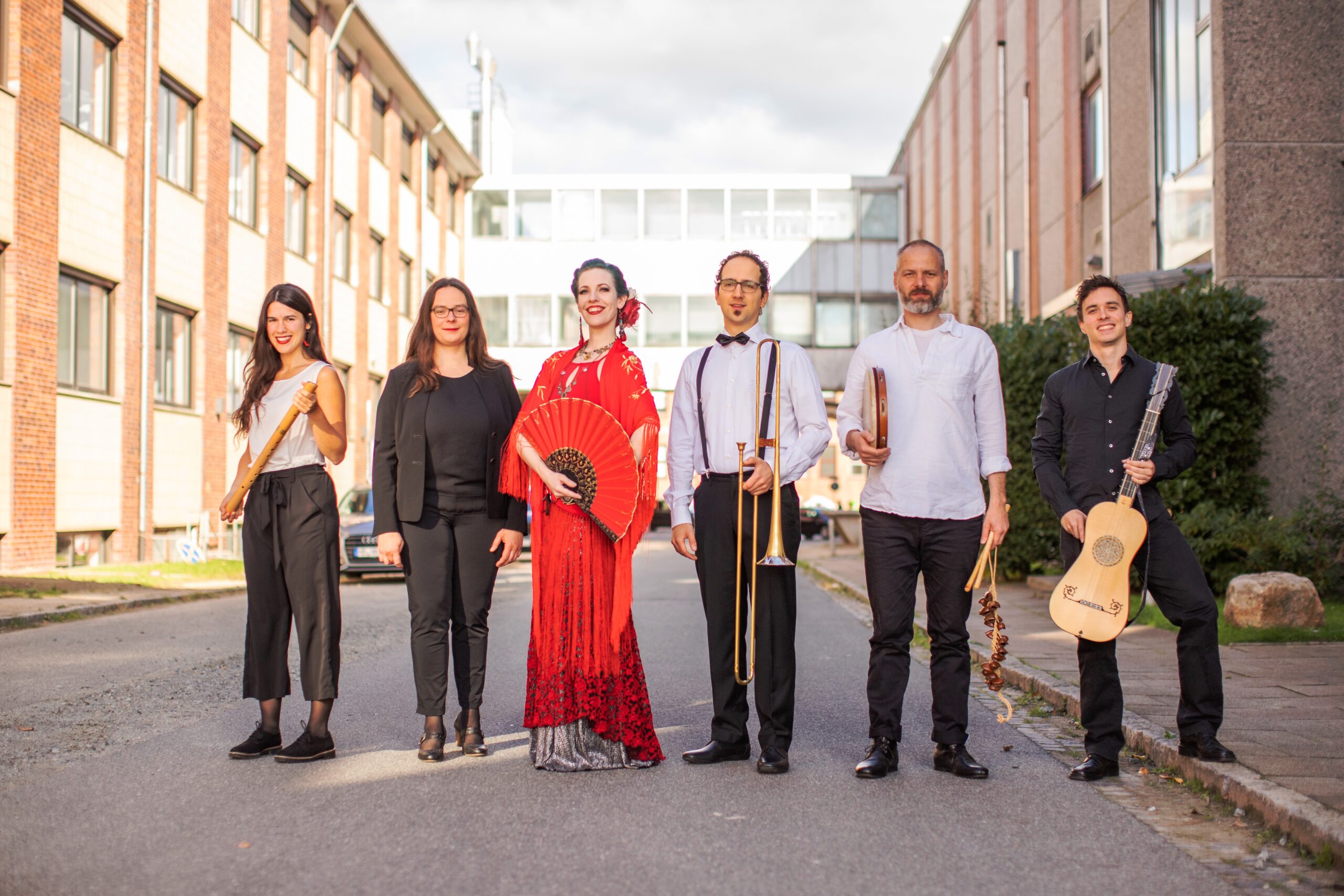
Dani Niemietz – Dance
John Rogers – Storyteller
Inés Pina Pérez – Baroque recorders
Juan González Martínez – Baroque trombones (conductor)
Miguel Bellas – Spanish guitar, theorbo
Lea Suter – 16-foot harpsichord
Peter Kuhnsch – Percussion