
#Munich – Orlando di Lasso
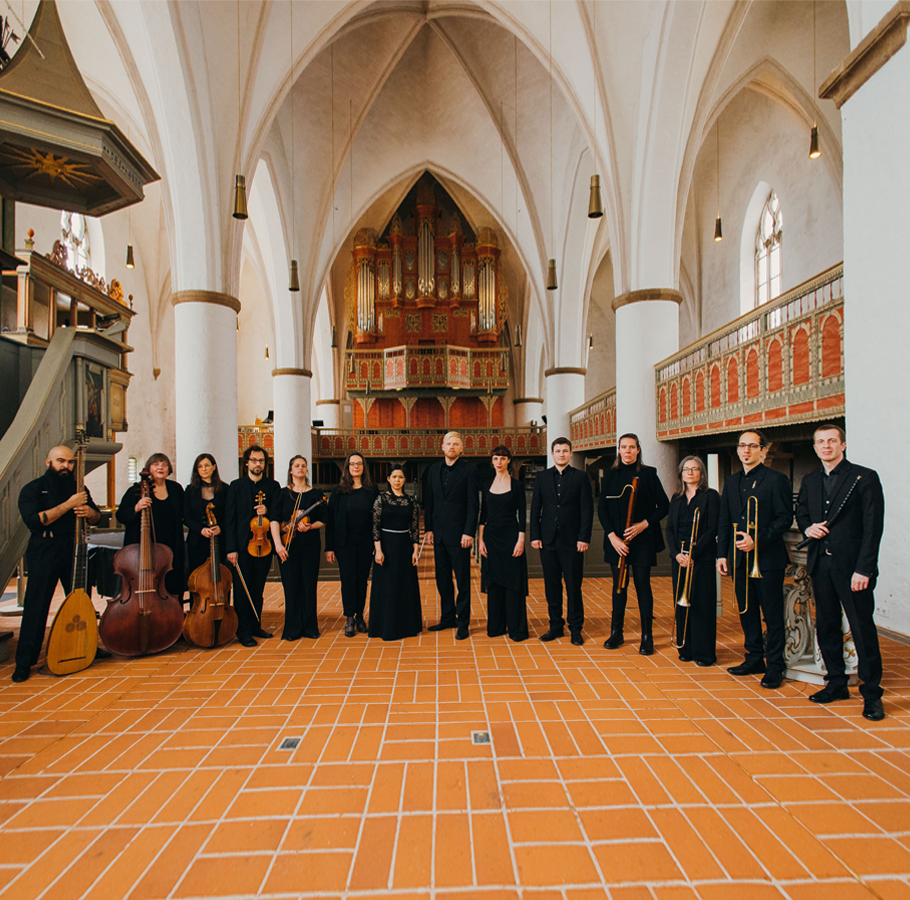
Matthias Weckmann probably obtained the right to perform "the best works from Venice, Rome, Vienna, Munich, Dresden, etc." with his Collegium Musicum every Thursday in the Domrempter of St. Jacob's Church in Hamburg in connection with obtaining citizenship, according to Johann Mattheson in 1740. It was a kind of concert series for all social classes, featuring not only ambitious amateurs—judging by the technical challenges of the works—but also highly professional musicians.
In 1663, the Jakobi organist composed ten sonatas for this very Collegium Musicum for cornett, violin, trombone, dulcian, and organ, which served as a model for the founding of the Weckmann Consort with the aim of performing his sonatas and reviving the highly virtuosic playing techniques of historical instruments.
To mark its fifth anniversary, the Weckmann Consort now wishes to perform these challenging, rarely played sonatas in a five-part concert series combined with thebest worksfrom Venice, Rome, Vienna, Munich, and Dresden, bringing them to a diverse audience as in Weckmann's day.
Just as Weckmann broughtthe best thingsfrom Europe's metropolises to Hamburg, we want to bring the best things—newly discovered—to the concert hall.
Orlando di Lasso's villanelles are rarely heard. These secular miniatures, written in the style of Italian folk songs, express the cheerfulness of a colorful society at the time of Lasso in Munich, between Southern and Northern Europe. Like Lasso, the many traveling musicians to Venice and Rome were inspired by the infectious joie de vivre and incorporated it into their music.
The Weckmann Consort performs a series of villanelles from the best works of Munich, juxtaposed with works by Johan Caspar Kerll, an anonymous sonata (discovered by Juan Gonzalez Martinez) by Oswald, and sonatas by Weckmann.
Weckmann Consort
Juan González, baroque trombone
Lea Suter, organ
Emilie Mory, violin
Josquin Piguet, cornett
Clemmens Schlemmer, dulcian